General overview
Polyneuropathy refers to a disease affecting multiple nerves of the peripheral nervous system, that is, those nerve pathways located outside the brain and spinal cord. It is not a single disease, but rather a collective term for over 200 different disorders that impair the function of nerve cells or their extensions (axons).
Long story short, Thai massage can help with polyneuropathy by relieving pain through the release of muscle tension and promoting blood circulation. However, it is not a cure. it is a close cooperation between the massage therapist and the client. For the client to benefit sustainably from the massage, they must diligently perform their exercises at home. Cavete: If you suffer from polyneuropathy, you should definitely mention this when filling out the customer intake form, otherwise damage to the nerves or skin may occur.
Common Symptoms
The symptoms usually begin gradually and often symmetrically in the feet, as the longest nerve pathways run there.
Sensory disturbances:
Tingling (“pins and needles”), burning (burning feet syndrome), numbness, or increased sensitivity to touch.
Motor disturbances:
Muscle weakness, cramps, or, in advanced stages, muscle wasting (atrophy).
Autonomic disturbances:
Impairment of internal organs, which can lead to dizziness (blood pressure fluctuations), digestive problems, or bladder dysfunction.
Root causes
There are over 250 known causes of polyneuropathy. The most common include:
Diabetes mellitus:
The most common cause in industrialized countries.
Alcohol abuse:
Direct toxic effect on the nerves.
Vitamin deficiency:
Especially a deficiency of vitamin B12.
Infections & autoimmune diseases:
Lyme disease or Guillain-Barré syndrome.
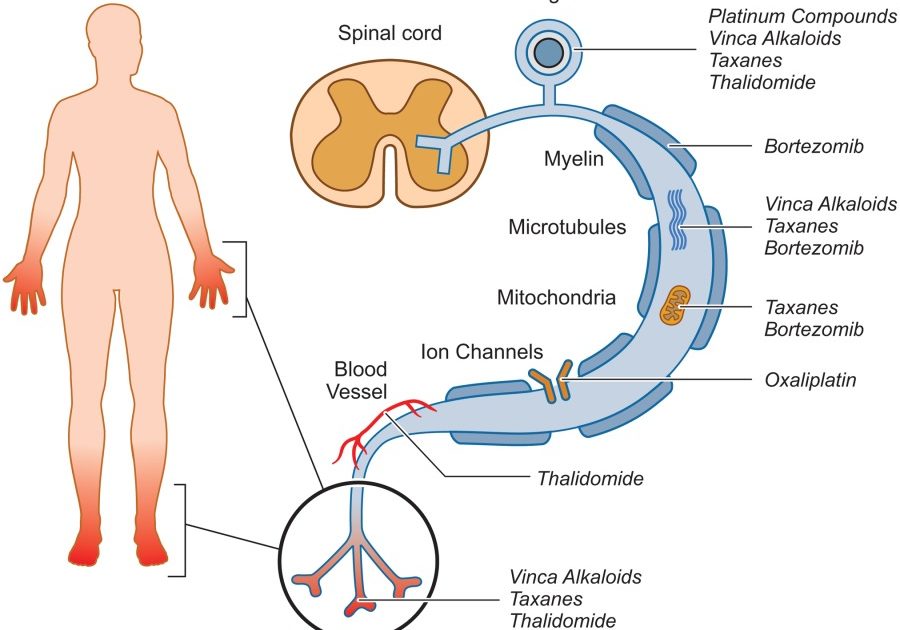
Chemotherapy-induced peripheral neuropathy (CIPN)
Bortezomib, Thalidomide, etc.
Genetic Factors:
Inherited forms of neuropathy.
Diagnosis and Therapy
Diagnosis:
The diagnosis is made by a neurologist, often using nerve conduction velocity (NCV) measurements and clinical examinations.
Treatment primarily depends on the underlying condition:
Addressing the root cause:
Optimal blood sugar control in diabetes or abstaining from alcohol.
Symptom pain management:
Use of specific medications for neuropathic pain.
Supportive measures:
Physiotherapy, Footreflexology, Best Ager Massage, , occupational therapy, and foot care to prevent further damage.
 Email this post to someone